

Getting under the skin
A straight-talking guide for anyone who cares about what goes into their food.
Few ingredients in food manufacturing attract more questions than sulphites. And yet for anyone who has ever picked up a pack of sausages, they are almost always there on the label, quietly listed among the ingredients.
As a family we have been making sausages for over 90 years, and for the last two decades (and counting) supplying premium sausages to UK supermarkets. So, when it comes to the topic of sulphites, what they are, why they’re in our sausages and whether we should be worried about them, we’re going to tackle these questions in an honest, jargon-free way. We won’t be telling you that sausages are something they are not, but we believe in choice and that everyone deserves the full picture.
So, What Are Sulphites?
Sulphites are a group of compounds that contain sulphurdioxide (SO₂). They occur naturally in some foods and wines during fermentation, but they can also be added to food as a preservative. It is this added form that you will see commonly listed on food labels.
You may see them labelled as: sulphur dioxide, sodium metabisulphite, potassium metabisulphite, sodium sulphite, sodium bisulphite or potassium bisulphite.
All of these are classified as sulphites under UK food law and, if present at or above 10mg/kg in the finished product, they must be declared on the label as a recognised allergen.
Source: UK Food Information Regulations 2014, as retained in UK law post-Brexit.
Why Are Sulphites Used in Sausages?
This is probably the most important question and the one with the most practical answer.
Fresh pork sausages are a perishable product. The combination of minced meat, fat, seasoning, and a natural or collagen casing creates an environment where bacteria can multiply quickly if conditions are not carefully controlled. Sulphites serve two specific purposes in sausage manufacturing:
Preservation and Food Safety
Sulphites inhibit the growth of spoilage bacteria and certain pathogens, helping to extend the safe shelf life of the product. For sausages sold through supermarkets, this is not simply a matter of convenience, it is a food safety requirement.
Unlike a traditional family butcher who might make sausages on a Tuesday morning and sell them the same day, a retail sausage must survive the full journey from production to packing, through chilled distribution, onto a supermarket shelf, and into a customer's fridge - often with a best before date of seven to ten days from production. That is a very different food safety challenge.
Colour Retention
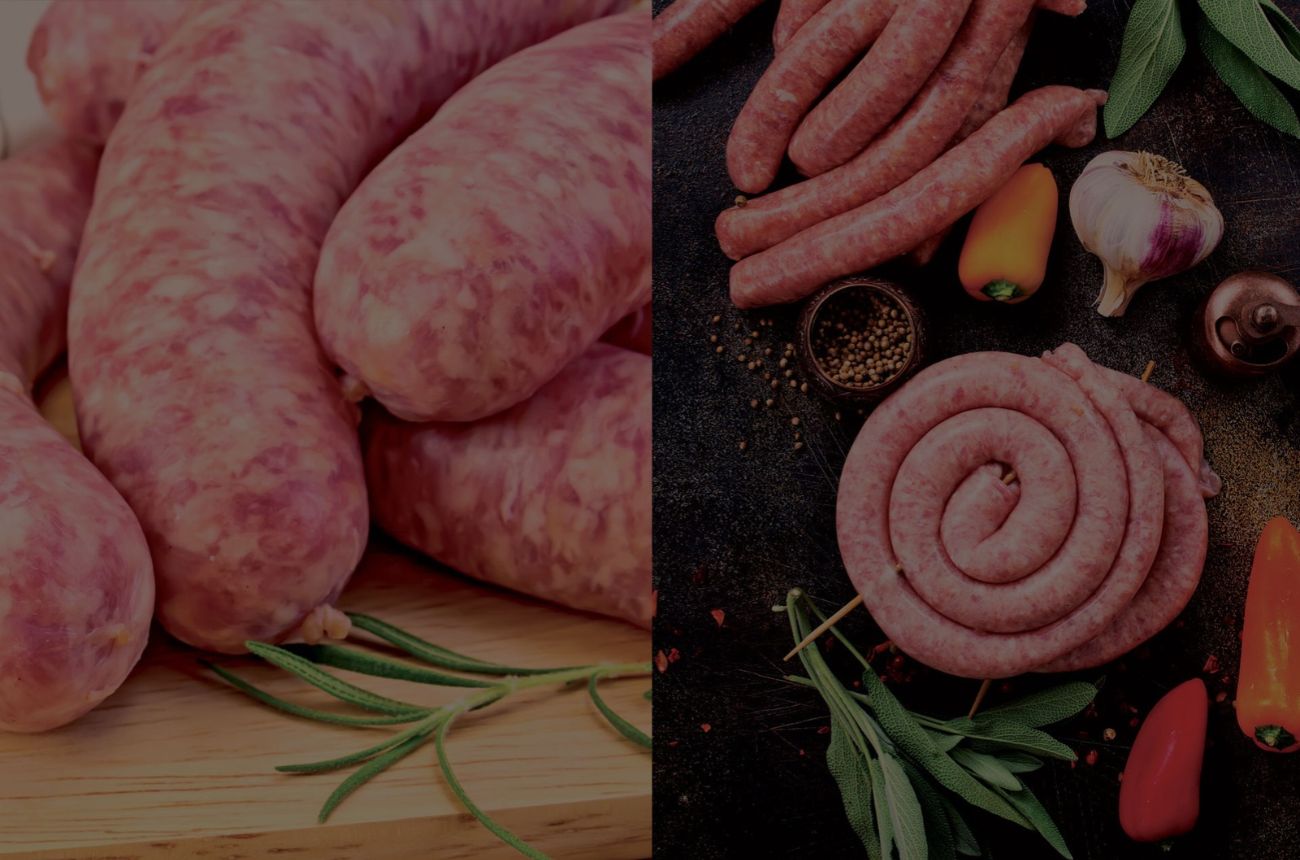
Sulphites can also help retain the appealing pinkish-red colour of fresh pork mince. Without them, oxidation causes the meat to turn grey or brown relatively quickly which, while not a safety issue, significantly affects how appetising the product looks. For a premium retail brand, maintaining a consistent, quality appearance is essential to meeting both retailer and consumer expectations.
Are Sulphites Harmful?
For the vast majority of people, sulphites at the levels found in food are considered safe. The European Food Safety Authority (EFSA) - whose assessments continue to inform UK food standards - has established anAcceptable Daily Intake (ADI) for sulphur dioxide, and the amounts present in atypical serving of sausages are well within safe parameters for most consumers.
For the majority of healthy adults and older children, enjoying sausages as part of a balanced diet is not considered a sulphite-related concern. As with all processed foods, the key is awareness and informed choice.
Source: EFSA opinion on there-evaluation of sulphur dioxide (E 220) and sulphites (E 221–E 228), 2016.
What are the Current UK Regulations on Sulphites in Sausages?
The use of sulphites in food is strictly regulated in the UK.Following Brexit, EU food additive regulations were retained and incorporated into UK law, meaning the standards that applied before 2021 remain in force under the authority of the Food Standards Agency (FSA).
Key regulatory points include:
Permitted maximum level: Sulphur dioxide (and equivalent sulphite compounds) may be used in fresh sausages at a maximum level of 450mg/kg, as set out in UK Regulation (EC) No 1333/2008 on food additives, as retained in UK law.
Mandatory allergen labelling: Any food containing sulphites at 10mg/kg or above must declare this on the label using the specific allergen name (e.g. 'sulphur dioxide/sulphites'), either emboldened within the ingredients list or clearly highlighted. This applies to all 14 major allergens under UK food law.
Regular review: The FSA and Food Standards Scotland(FSS) continue to monitor the science around food additives and can update guidance when new evidence emerges.
As a business that has supplied major UK supermarkets for over 20 years, compliance with these regulations is not a box-ticking exercise for us, it is embedded in everything we do, from recipe development through to production and labelling sign-off.
Source: UK Food StandardsAgency; UK Regulation (EC) No 1333/2008 as retained in UK law.
Can I buy sulphite-free sausages?
Yes - sulphite-free sausages do exist, and whilst we have been actively working on reducing and/or eliminating sulphites from our retail offering, we want to be transparent about the challenges involved.
Removing sulphites from a retail sausage is not simply a case of leaving an ingredient out. It requires careful reformulation to maintain the food safety standards, shelf life, colour, taste, and texture that customers expect and that supermarket partners require. Getting that balance right (without compromising on quality) takes time and rigorous testing. As a business we are committed to making progress in this area, but not at the expense of the product integrity and trust that have taken 90 years to build.
How do sulphite levels in sausages compare to other foods?
Sulphites are used across a wide range of food and drink products - including wine, dried fruit, vinegar, and some pre-prepared salads.A glass of white wine, for example, can contain considerably more sulphites than a serving of sausages. Context matters when thinking about overall dietary intake.
Porky Whites Commitment to You
We have never believed in hiding behind technical language or brushing difficult questions aside. Our heritage is rooted in the craft of the family butcher - someone who knew their customers by name and took pride in being able to tell them exactly what was in their product and why.
Sulphites have a legitimate, well-regulated role in sausagemanufacturing. For most people, they are not a cause for concern. For thosewith specific sensitivities, clear labelling - which we are legally required toprovide and proud to give - allows you to make the right choice for yourfamily.
We will keep working on cleaner recipes without ever cutting corners on safety or quality. And we will always be straight with you about where we are in that journey.