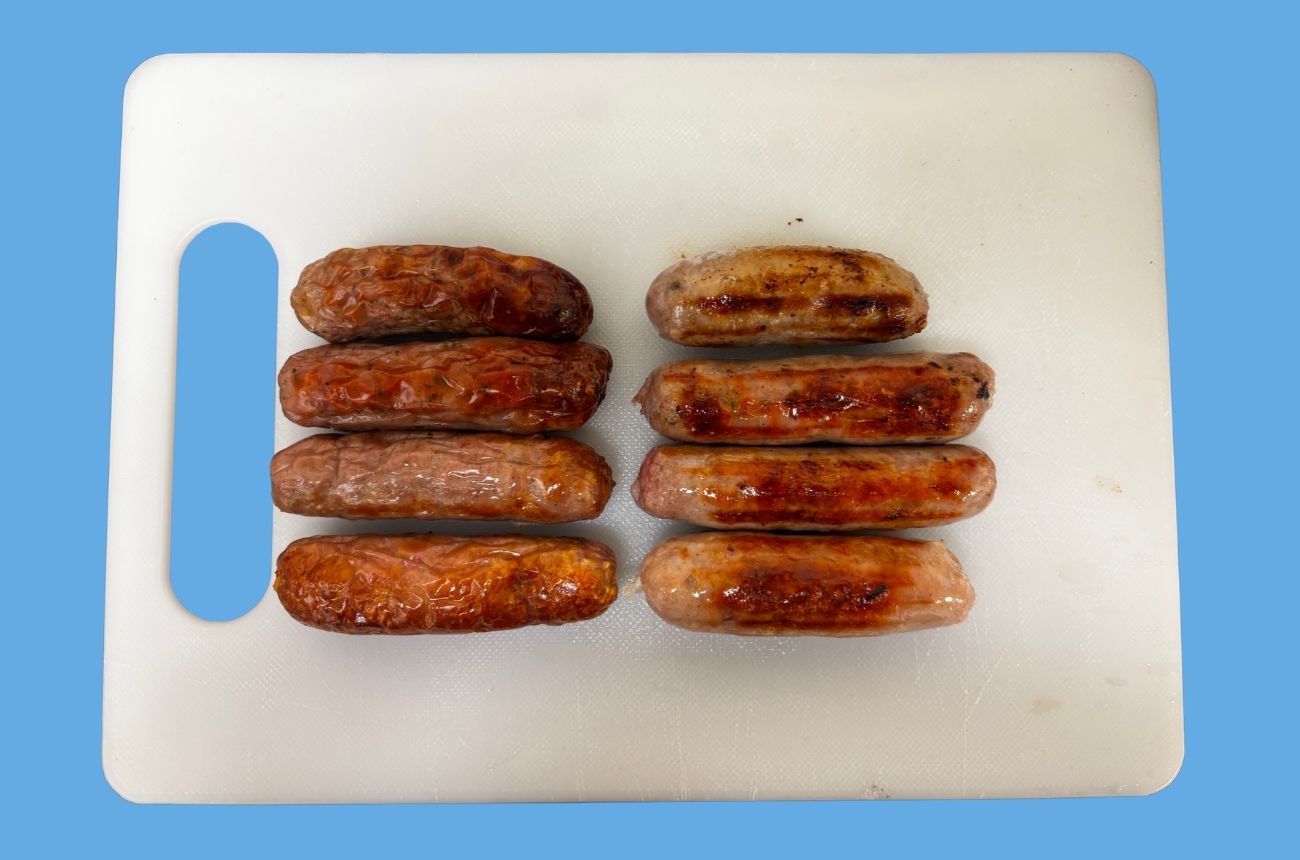


Picture the scene. It’s Saturday morning and you’ve got a hankering for a sausage sandwich. You head to the fridge pick up a pack of sausages, turn the hob up to 10 and throw three plump sausages (optimal number we think) into a pan. While you wrangle a loaf for two slices which you slather with butter and your sauce of choice, they sizzle away. Returning to the pan you find your sausages have shrunk. You feel frustrated, disappointed and wished you’d put in another two sausages.
Is it bad luck or just a sausage injustice? In reality it’s both. So, why do some sausages shrink while others hold their size?
The five common causes for sausage shrinkage
1- High water content
Water is an essential ingredient in sausage making. It’s used to improve texture, juiciness, and ease the manufacturing process, but too much water makes the mix too wet and can lead to poor binding, and during cooking it evaporates leaving your sausage looking a little flat.
2- Low meat percentages
It’s worth noting that when cooked, all meat shrinks due to protein contraction and fat rendering, but sausages with lower meat percentages are prone to losing their structural integrity and so shrinking.
3- Excess fillers
If your sausage contains too many fillers, then it cannot retain the necessary moisture. During the cooking process these fillers can release absorbed moisture which creates spaces in the sausage which leads to a shrunken appearance.
4- Poor fat balance
This comes down to the balance of ingredients in your sausage and how it has been made.For example, too much fat in the mix can lead to leaks during cooking and the inevitable shrinkage, while failing to properly emulsify the fat with the protein and water during the manufacturing process, means the fat will melt away during cooking leading to a porous, hollow structure that collapses.
5- Cooking at too high a temperature
Cooking your sausages at too high a temperature not only makes everything tighten up, it also liquefies the fats too quickly and creates a pressure build-up under the skins. When (not if) your sausages inevitably split, all that moisture will escape leaving your sausages looking sad and shrunk. Low and slow is best.
NB. It’s important to recognise this last cause can impact every type of sausage from the cheapest to the most expensive.
Why do cheap sausages shrink while and quality ones don’t
When we talk about cheaper sausages, we’re really talking about how they’re made rather than what they cost. Sausages with a low pork content (often below 40%) often rely on added water and non-meat ingredients to bulk them out. When cooked, that extra water evaporates quickly and the fat tends to render out rather than gently baste the meat, which weakens the structure and causes the sausage to collapse in on itself. The end result is a noticeably smaller, drier sausage on the plate.
Higher meat content sausages, by contrast, contain less added water and benefit from a better balance of meat and fat.This gives them a stronger structure, allows the fat to melt slowly through the sausage, and encourages proper browning rather than boiling in the pan. The payoff is simple: less shrinkage, better texture, and more sausage satisfaction.
Why shrinkage also affects flavour
When it comes to sausage shrinkage, it’s not just the appearance that suffers; it’s also the flavour. As a sausage loses water and fat during cooking, it also loses the elements that keep it juicy and carry seasoning. Without that internal basting, the meat dries out, flavours become unbalanced, and what should be a rich, savoury bite turns into something far less rewarding. In short, a sausage that shrinks is rarely a sausage that delivers.
Value vs Price
The adage “you get what you pay for” certainly applies to sausages. Cheap sausages may cost less, but you get less sausage on your plate. Premium sausages might cost a bit more, but they’ll deliver more in flavour, quality and ultimately fill you up for longer. We’re not saying that cheap sausages are bad, but it’s important to understand what the difference is and take an informed approach to choosing the right banger.